Pages

Showing posts with label Azerbaijan. Show all posts

Thursday, 10 January 2013

Azerbaijan Pokes Russia In The Eye


Russia has decided to shut down its Daryal type long range missile detection radar in Azerbaijan after the Azerbaijanis demanded that a new lease increase annual rent from $7 million to $300 million. Russia refused to pay and will shut down the Azerbaijan radar and dismantle it. The ten year lease ended on December 24, 2012. This radar went operational in 1983, and was supposed to be one of seven. But the end of the Cold War halted that project and only one other Daryal radar was built (on the north coast of Russia). That one detected missiles coming in over the North Pole from North America. The radar in Azerbaijan covered all of the Middle East and India. Its role will be assumed by a more recent radar design that recently went into service on the Black Sea coast. Russia had offered to upgrade the Azerbaijan radar and pay more rent but not $293 million more a year. In addition, Russia has always paid Azerbaijan $5 million a year for electricity and $10 million a year for other services. About 500 Azerbaijanis were employed at the radar station, in addition to 1,100 Russians.

Meanwhile, Russia has developed the Voronezh radar to replace the Daryal design and the older ones Daryal was replacing. Last June, Russia activated its fourth Voronezh early warning radar in Irkutsk, Siberia. This was the first of three to be built in eastern Russia. The other two will be in action by 2017. The Voronezh radars in Western Russia cost between $85 million and $128 million each, while those in eastern Russia (VP models) cost over 50 percent more because they cover a wider area. The Voronezh radar can detect incoming missiles up to 6,000 kilometers away, as can the Daryals.


Three Voronezh M/DM radars were installed in Western Russia between 2005 and 2011. One is in Kaliningrad on the Baltic Sea. Another is on the east coast of the Black Sea (Armavir), while the third is at the eastern end of the Baltic Sea outside St Petersburg.

All this recent radar building activity was caused by the collapse of the Soviet Union in 1991, and the destruction of the Russian ballistic missile early warning system. This came about because each of the fourteen new nations, carved out of the Soviet Union, got to keep whatever government property that was within the new borders. That meant many of the radar stations that formed the Soviet ICBM early warning system were now owned by foreign countries. A combination of disputes over money, and aging electronics, eventually put many of those early warning radars out of action. The two in Ukraine went off line three years ago. Russia was hoping to keep the Azerbaijan radar going but that was not to be.

The rising price of oil over the last decade provided Russia with the cash to rebuild its ballistic missile early warning radar system. The first one, outside St Petersburg, was built in 18 months (versus over ten years for the ones it replaced). The new design uses much less electricity, has a smaller staff, and is more reliable. Russia has adopted a lot of Western technology, and work practices, since the collapse of the Soviet Union and it all showed in this radar station. The St. Petersburg facility replaced one that was in Latvia and was dismantled in 2003, after going off line in 1998. The one new radar in Armavir (on the Black Sea coast) was built to replace defunct Soviet era radars in Azerbaijan and Ukraine.

Wednesday, 9 January 2013

The air defense system of Azerbaijan put on alert to prevent illegal flights airport Khojali

Baku .. Azerbaijani Defense forces control all airspace of the country, including the occupied regions.

According to the source close to the document, what happens in the country's airspace is controlled by radar systems. In a given direction, the Azerbaijani army is on alert to prevent any attempt of the enemy: "The registration even launched drones in the sky Armenians of Karabakh. Attempts of Armenians to carry out illegal flights in this area will be avoided in any case. We control all processes and are ready to preventive actions at every moment. This can be done by any means, as is well know the enemy. "

According to the officer, the international conventions to which Azerbaijan spouse also allow him to take action against attempts to violate the airspace internationally recognized: "To justify measures Azerbaijan there is a legal basis in fact" .

Note that the Armenians have found Khojali airport in Nagorno-Karabakh in Azerbaijan. A few days ago, "Prime Minister" of the separatist regime of Nagorno-Karabakh, said that in the near future at the airport will be the technical missions.


It is also reported that the airplane was purchased for organizing flights to Yerevan in Armenia Khankendi already.

The Azerbaijani side has officially declared that illegal flights in the airport Khojali be prevented.

Thursday, 3 January 2013

Azerbaijan Pokes Russia In The Eye

Russia has decided to shut down its Daryal type long range missile detection radar in Azerbaijan after the Azerbaijanis demanded that a new lease increase annual rent from $7 million to $300 million. Russia refused to pay and will shut down the Azerbaijan radar and dismantle it. The ten year lease ended on December 24, 2012. This radar went operational in 1983 and was supposed to be one of seven. But the end of the Cold War halted that project and only one other Daryal radar was built (on the north coast of Russia). That one detected missiles coming in over the North Pole from North America. The radar in Azerbaijan covered all of the Middle East and India. Its role will be assumed by a more recent radar design that recently went into service on the Black Sea coast. Russia had offered to upgrade the Azerbaijan radar and pay more rent, but not $293 million more a year more. In addition, Russia has always paid Azerbaijan $5 million a year for electricity and $10 million a year for other services. About 500 Azerbaijanis were employed at the radar station, in addition to 1,100 Russians.
Meanwhile, Russia has developed the Voronezh radar to replace the Daryal design and the older ones Daryal was replacing. Last June Russia activated its fourth Voronezh early warning radar in Irkutsk, Siberia. This was the first of three to be built in eastern Russia. The other two will be in action by 2017. The Voronezh radars in Western Russia cost between $85 million and $128 million each, while those in eastern Russia (VP models) cost over 50 percent more because they cover a wider area. The Voronezh radar can detect incoming missiles up to 6,000 kilometers away, as can the Daryals.
Three Voronezh M/DM radars were installed in Western Russia between 2005 and 2011. One is in Kaliningrad on the Baltic Sea. Another is on the east coast of the Black Sea (Armavir), while the third is at the eastern end of the Baltic Sea outside St Petersburg.

All this recent radar building activity was caused by the collapse of the Soviet Union in 1991, and the destruction of the Russian ballistic missile early warning system. This came about because each of the fourteen new nations, carved out of the Soviet Union, got to keep whatever government property that was within the new borders. That meant many of the radar stations that formed the Soviet ICBM early warning system were now owned by foreign countries. A combination of disputes over money, and aging electronics, eventually put many of those early warning radars out of action. The two in Ukraine went off line three years ago. Russia was hoping to keep the Azerbaijan radar going, but that was not to be.
The rising price of oil over the last decade provided Russia with the cash to rebuild its ballistic missile early warning radar system. The first one, outside St Petersburg, was built in 18 months (versus over ten years for the ones it replaced). The new design uses much less electricity, has a smaller staff, and is more reliable. Russia has adopted a lot of Western technology, and work practices, since the collapse of the Soviet Union and it all showed in this radar station. The St. Petersburg facility replaced one that was in Latvia and was dismantled in 2003, after going off line in 1998. The one new radar in Armavir (on the Black Sea coast) was built to replace defunct Soviet era radars in Azerbaijan and Ukraine.

Tuesday, 18 December 2012

Azerbaijan: Defence assortment reaches 700

Baku. Rashad Suleymanov - APA. Over the last 5 years in business associations and the Ministry of Defense Industry was established more than 40 product groups, said the Minister of Industry (MID) defense Yavar Jamalov in article published in the newspaper "Respublika".

Three of these facilities were commissioned in 2012. Among them - the factory test driver for the creation and improvement of small arms, the production of individual masks and special means of defense, and ammunition of different calibers.

In total, the assortment of defense companies MID has reached 700. This year, contracts were signed for production of 437 kinds of defense products.

"At present, the production of armored vehicles and weapons such as" Matador "and" Marauder "was perfectly mastered and successfully implemented their mass production. For the first time in the country began to produce unmanned aerial vehicles "said Minister.

The Minister also spoke about new products, whose production started in the previous period and began mass production. The example used is a system of rocket artillery, armored caterpillar, masks, bombs, collimators, claymore mines, signal pistols, armored vehicles, artillery and various parts of arms.


Speaking of the future plans of the Ministry, the Minister noted that provides for the production of various mines, large caliber artillery, explosives for shells of different types of artillery, combat units for armored vehicles, modern storage boxes and transportation of firearms and ammunition, etc..

Sunday, 21 October 2012

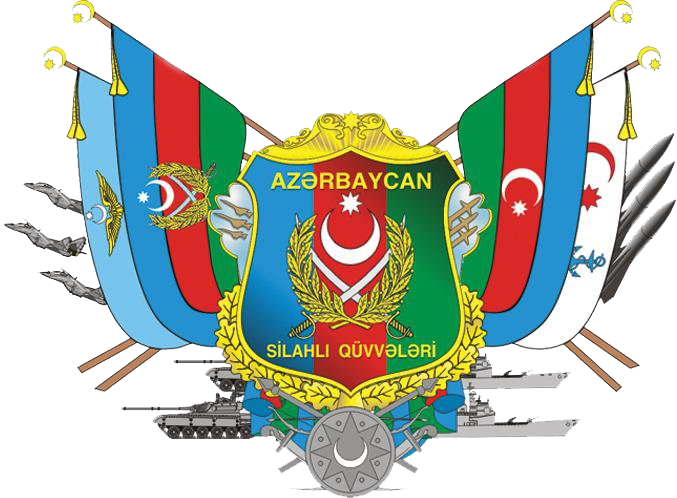
Azerbaijan releases $ 3.7 billion to the armed forces

http://upload.wikimedia.org/wikipedia/commons/7/77/Azerbaijan_Armed_Forces.png

Baku. -. Azerbaijan in 2013, plans to spend the defense budget of the country 2 billion 910 million 656 thousand manats (3 billion 707 million 369 thousand USD), APA reports quoting the government of Azerbaijan.

1 billion 416 million 582 thousand manats will be allocated to the armed forces, security forces and the military-industrial complex. 1 billion 528 million 582 thousand manats will be attributed to the defense forces (including 1 billion 19 million 442 thousand manats for army and navy, 111 000 000 749 000 - Service Status border guards 5,000,000 391,000 - National Service for the mobilization and conscription) 106 000 000 439 000 manats will be assigned to national security, 2 million 733 thousand manats - applied research in the field of defense, 3 million manat - the Ministry of Defense Industry for other expenses.


In addition, the country's budget provides for the allocation of additional funds in the amount of 1.172 billion manat to improve the defense capabilities of the country. Is 75,952,000 manats, or 6.9% more than in 2012.

The armed forces of internal troops and state service special protection will be financed from the funds provided by the enforcement of the law and the judicial budget.

For internal forces in 2013 will be allocated 136 000 000 234 000 manats, 74 million 74 thousand manats - service status of special protection.
Related Posts Plugin for WordPress, Blogger...