Pages

Showing posts with label China. Show all posts

Tuesday, 29 January 2013

Is China Next To Suffer A Debt Crisis?


Ever since the sovereign debt crisis in Europe and the pending one in the United States, investors and financial pundits have been wondering whether the next big shoe to drop was in China. After all, it’s the world’s second largest economy after the U.S., and its government spends like a drunken sailor.
While the chances of a full blow China debt crisis are low, the risk is real, warns Barclays Capital in a 31 page report released Monday.
China is a closed system. The debt remains in the hands of the public. Foreign entities pose no real threat to it,unlike in other countries where foreign investors could sell out of debt or short it, causing large spikes in yields and making interest payments less affordable.  Think Greece and Spain for example. China is at no one’s mercy, except its own.
The real result of China’s overspend is a Japanification of its economy in the long-run.  For the country itself, it might not be such a terrible thing. Japan is modern. It is home to some of the biggest brands in the world. Society is stable and middle class. China is not yet any of those things. And while comparing China to Japan is like comparing Brazilian soccer players to Argentinians, the debt of the Chinese government and its state-owned banks is growing and that points to a slowdown in the China growth story.

Wednesday, 23 January 2013

China’s Focus on Aerospace Raises Security Questions

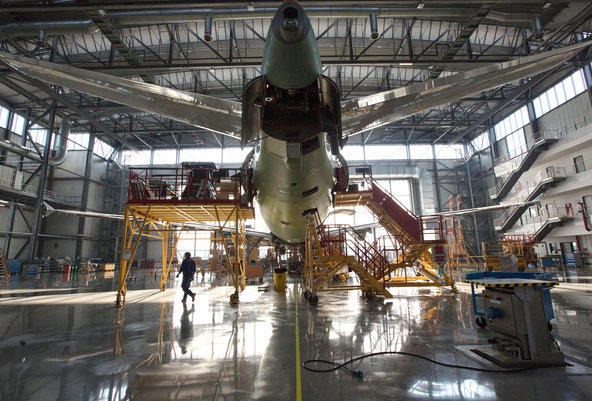
When Airbus executives arrived here seven years ago scouting for a location to assemble passenger jets, the broad, flat expanse next to Tianjin Binhai International Airport was a grassy field.
Now, Airbus, the European aerospace giant, has 20 large buildings and is churning out four A320 jetliners a month for mostly Chinese state-controlled carriers. The company also has two new neighbors — a sprawling rocket factory and a helicopter manufacturing complex — both producing for the Chinese military.
The rapid expansion of civilian and military aerospace manufacturing in Tianjin reflects China’s broader ambitions.
As Beijing’s leaders try to find new ways to invest $3 trillion of foreign reserves, the country has been aggressively expanding in industries with strong economic potential. The Chinese government and state-owned companies have already made a major push into financial services and natural resources, acquiring stakes in Morgan Stanley and Blackstone and buying oil and gas fields around the world.
Aerospace represents the latest frontier for China, which is eyeing parts manufacturers, materials producers, leasing businesses, cargo airlines and airport operators. The country now rivals the United States as a market for civilian airliners, which China hopes to start supplying from domestic production. And the new leadership named at the Party Congress in November has publicly emphasized long-range missiles and other aerospace programs in its push for military modernization.

Sunday, 20 January 2013

Victory in Afghanistan? Not without US troops


During the Vietnam War, Sen. George Aiken, a Vermont Republican, was famous for suggesting that we declare victory and go home. (What he actually said is a little more nuanced, but that was the popular perception.)

President Obama seems to be pursuing a version of this strategy in Afghanistan. At least that is the inference one can draw from his claims of success at a news conference with Afghan President Hamid Karzai in which the two leaders unveiled an acceleration of the timetable for U.S. troops to step back from combat.

While Obama conceded that we had “probably not ... achieved everything that some might have imagined us achieving in the best of scenarios,” he nevertheless tried to put a smiley face on the war effort. “Did we achieve our central goal? And have we been able, I think, to shape a strong relationship with a responsible Afghan government that is willing to cooperate with us to make sure that it is not a launching pad for future attacks against the United States? We have achieved that goal. We are in the process of achieving that goal.”

There is actually an important difference between the last two sentences. Which is it: Have we achieved the goal or are we in the process? If the latter, then that would argue for a continued U.S. commitment to Afghanistan; if the former, then it suggests our mission is complete.

Sunday, 13 January 2013

Chinese J-16 Sino Strike Flanker Fighter Jet Prototype

Chinese J-16 Sino Strike Flanker Fighter Jet Prototype at the at aircraft manufacturing facility of the Shenyang Aircraft Corporation (SAC)


Chinese QBJ 10 12.7mm Sniper Rifle


Chinese QBJ 10 12.7mm Sniper Rifle uses 12.7x108mm round which are claimed to be capable of  penetrating 50mm of steel plate at 1500 m  and 100mm when fired from a distance of 200 m.


QBJ 10 12.7mm sniper rifle is being used by the Special operation forces of the  Peoples Liberation Army (PLA) and PLA marines.

QBJ 10 is considered to be very effective against lightly armored targets within 1000 meters. 

Saturday, 12 January 2013

Chinese newspaper warns of military fray with Japan


The Chinese government-run Global Times has warned of a potential clash between the military arms of Japan and China as the tension increases between the two countries in their territorial dispute over the Senkaku Islands. This came a day after Chinese jets entered into Japan’s air defense identification zone on the sea, north of the islands, prompting Japanese F-15 fighter jets to take off from their Naha base in Okinawa Prefecture and check the area.

The paper’s editorial said that the military clash is highly probable and that the citizens need to prepare for the worst. It proceeds to state that the Chinese people are waiting on their government to take concrete actions “against Japan’s provocations”, pertaining to Japan’s dispatch of jets over an area near the Senkaku Islands, which China refers to as Diaoyu.

Chinese administration official Liu Caigui was quoted by the official Xinhua News Agency to have said that China will continue to be firm in its opposition of infringement committed by its neighboring countries as to territories that China claims to be hers. According to him, “Faced with a sharper and more complicated

Thursday, 10 January 2013

Indonesia-China hold defense consultation meeting


Beijing  - Indonesia and China have again staged a consultation meeting to improve the two countries` relations and cooperation in the field of security and defense.

The Indonesia-China Defense Consultation Forum at the People`s Liberation Army (PLA) Headquarters was the fifth since 2007.

Indonesia`s delegation was led by deputy minister of defense Sjafrie Sjamsoeddin while the Chinese delegation was led by PLA`s deputy chief of general staff Lieutenant General Qi Jian`guo.

The meeting discussed development of the defense cooperation agreement made by the two countries in the framework of strategic partnership in April 2005.

Sjafrie Sjamsoeddin said that the meeting was initially scheduled on November 2012 but it was then postponed due to a process of leadership change in that country in the month.

Meanwhile "we also had an important agenda in that month namely a leadership meeting which had only ended yesterday," he added.

Top 10: how does Chinese PLA eye on 2012 world military

1. China’s first aircraft carrier, the “Liaoning” ship, was officially delivered to PLA Navy.

After the construction, test and trial navigation were completed as scheduled, China’s first aircraft carrier was formally delivered to the Navy of the Chinese People’s Liberation Army (PLA) on September 25, 2012.

Approved by the Central Military Commission (CMC), it was named the “Liaoning” ship of the PLA Navy with a designated hull number of “16″. Related scientific experiments and military trainings continued following the official delivery and commissioning of the “Liaoning” ship.

On November 25, Chinese Navy’s first batch of carrier-borne aircraft pilots successfully flew the home-made J-15 fighters to accomplish the arrested deck landing and ski-jump takeoff on the “Liaoning” ship.

2. The U.S. announced new military strategy.

US President Barack Obama announced a new military strategy on January 5, 2012 to shift U.S. focus to the Asia-Pacific region. According to the strategy, the U.S. will slim down its army’s scale, reduce its military presence in Europe and strengthen its military presence to the Asia-Pacific region.

The US Defense Secretary Leon E. Panetta expounded the “rebalance strategy in Asia-Pacific region” at the Shangri-La Dialogue on June 2, 2012 and stated that the U.S. would deploy 60% of its warships in the Pacific Ocean by 2020.

3. Russia’s first fifth-generation strategic missile corps established

The Russian Ministry of Defense announced the establishment of its first fully-equipped missile corps of the fifth-generation guided missiles, namely “Yars” and “Aspen-M”, on September 20 in the State of Ivanovo near Moscow. After the fifth-generation guided missile system is equipped, Russia further enhanced its capability to break through the anti-missile system.

Prior to that, the NATO announced the official launch of the European anti-missile system on May 20.

4. “RIMPAC 2012″ exercise held

The world’s largest multi-national maritime military joint exercise, namely the “Rim of the Pacific (RIMPAC) 2012″ led by the U.S. was held in Hawaii and its surrounding waters on June 29 with the participation of 42 warships, 6 submarines, 200-plus aircraft and 25,000 soldiers from 22 countries. Russia and India participated in the exercise for the first time.

The contents of this exercise included the offense-defense combat of aircraft carriers, beach landing drills and others aiming to test the coordinated operation capability between the U.S. fleet and the allied fleets in the Asia-Pacific region.

5. Israel took “Defense Pillar” military action against Gaza.

The number of rockets fired into Israel by armed personnel of Palestinians saw sudden increase in Gaza Strip starting from November 10. Israel’s Defense Forces initiated a large-scale military operation, code-named “Defense Pillar”, against Gaza from November 14 to 21.

This action led to the death of 162 Palestinians, including Jabari, the No. 2 leader of the Palestinian Islamic Resistance Movement (Hamas) and leader of the Qassam Brigade, together with the destruction of a great number of infrastructures in Gaza. This was the most intense fire exchange between Israel and Hamas in recent years.


6. Syrian civil war upgraded

The Syrian government forces and the main opposition armed forces successively expressed their willingness on October 25 to accept the proposal made by Brahimi, the special representative of the UN-Arab League’s envoy for the Syrian crisis, to cease fire during the Eid al-Adha period.

However, on the first day of the ceasefire, also the first day of Eid al-Adha festival, a car bomb exploded in the south of Damascus, capital of Syria, killing 5 and injuring 32, and nullified the agreement of the Eid al-Adha ceasefire. Under the support from exterior forces, the Syrian opposition armed forces gained rapid growth in their strength and more places kept falling into their control.

7. DPRK successfully launched “Light Star III” satellite.

The Democratic People’s Republic of Korea (DPRK) used the Galaxy III carrier rocket and successfully launched the second “Light Star” satellite into the pre-selected orbit on December 12.

The U.S. and its allies held that DPRK’s usage of the satellite launch to test its ballistic missile technology posed a threat against the peace and security in the region, and committed a provocative act to undermine the global non-proliferation system.

8. Indian test-fire of intermediate-range ballistic missile “Agni-5″ successful

India successfully launched the “Agni-5″ intermediate-range ballistic missile on April 19 for the first time. With a range of 5,000-plus kilometers, the missile is capable of carrying multiple nuclear warheads. To date, it is India’s farthest-reaching missiles, covering the entire Asian continent, half of Europe and most of the Indian Ocean.

9. U.S. and its allies held “Schriever-2012″ joint military exercise.

The U.S., the United Kingdom, Canada, Denmark, France, Australia and other countries held the “Schriever – 2012″ international military exercise from April 19 to 26 at the Nellis Air Force Base in Nevada. Through the use of network to simulate military operations in outer space, the operations of aerospace and cyberspace were closely integrated with the cooperation between the U.S. and its allies being greatly promoted in the fields of aerospace and cyberspace.

10. UN Security Council decided to deploy Africa-led Support Mission in Mali.

Both Mali of the West Africa and Somalia of the East Africa and their nearby areas have witnessed an aggravated threat of terrorism in 2012. The United Nations Security Council unanimously adopted a resolution on December 20 to deploy an African-led international support mission in Mali (African-led Support Mission).

In a statement made by the Economic Community of Western African States (ECOWAS) in Abuja on November 12, a total of 3,300 soldiers will be dispatched to Mali in order to help Mali fight against the armed organizations in the north.

Wednesday, 9 January 2013

China Goes All In With The Z-10

China’s new Z-10 helicopter gunship is apparently in mass production. In the last year the Z-10 has been photographed serving with four of the five aviation brigades in the army. There is a squadron (12 helicopters) of Z-10s in each brigade. The move to mass production of the Z-10 was a surprise because this aircraft has been in development for over 14 years and the several prototypes encountered numerous problems. This led to failed attempts to buy or steal helicopter gunship technology from Russia and South Africa.

Two years ago some of the Z-10 prototypes were sent to Chinese Army aviation units for field testing. While not a failure, the newer and lighter Z-19 was apparently seen as a better candidate for mass production. Work continued on the Z-10 because the Z-19 is basically an armed scout helicopter. China always wanted something more like the American AH-64 Apache. That would be the Z-10, at least once all the development problems were overcome. The seven ton Z-10 is smaller than the 10 ton AH-64 and also has a crew of two. The Z-10 is armed with 30mm autocannon and can carry up to a ton of rockets or missiles.

Tuesday, 8 January 2013

A Major U.S. Intelligence Failure On Estimating China's Total Number Of Nuclear Weapons?

New U.S. Law Seeks Answers On Chinese Nuke Tunnels

 The U.S. military must consider both conventional and nuclear capabilities to “neutralize” China’s underground nuclear weapons storage facilities, according to a Pentagon authorization signed into law.

The new National Defense Authorization Act (NDAA), signed by U.S. President Barack Obama on Jan. 2, orders the Commander of the U.S. Strategic Command (STRATCOM) to submit a report by Aug. 15 on the “underground tunnel network used by the People’s Republic of China with respect to the capability of the United States to use conventional and nuclear forces to neutralize such tunnels and what is stored within such tunnels.”
A Georgetown University team led by Phillip Karber conducted a three-year study to map out China’s complex tunnel system, which stretches 3,000 miles.
The 2011 report, “Strategic Implications of China’s Underground Great Wall,” concluded that the number of nuclear weapons estimated by U.S. intelligence was incorrect. His team estimated that as many as 3,000 nuclear weapons could be hidden within a vast labyrinth in several locations in China. U.S. intelligence estimates have been reporting consistently that China had, at the most, 300 nuclear warheads in its arsenal.
Karber’s report presents evidence of a complex system of tunnels in areas noted for nuclear testing and storage — a far greater subterranean cavity than needed for just 300 nuclear weapons.
NDAA sections 1045, 1271 and 3119 all highlight U.S. congressional concerns over China’s nuclear and military modernization efforts. Bonnie Glaser, a China specialist at the Center for Strategic and International Studies, doubts these sections of the NDAA will have major policy consequences for U.S.-China relations: “The intelligence community tracks China’s nuclear weapons closely — is a federally funded research and development center going to find a new threat?”

Overall, Glaser believes the new reporting requirements are a reaction to Karber’s work, making him one of a few lonely challengers to suggest that U.S. intelligence estimates are wrong.
The NDAA-directed report by STRATCOM must include identification of the knowledge gaps regarding such nuclear weapons programs and a discussion of the implications of any such gaps for the security of the U.S.
The report must also assess the nuclear deterrence strategy of China, including a historical perspective and the geopolitical drivers of such strategy, and a detailed description of the nuclear arsenal, including the number of nuclear weapons capable of being delivered at intercontinental range.
The report will also include a comparison of the nuclear forces of the U.S. and China, projections of the possible future nuclear arsenals of China, a description of command-and-control functions and gaps, assessment of the fissile material stockpile of China, and its civil and military production capabilities and capacities.
Karber takes little credit for the NDAA requirements, which many have begun calling the “Karber effect.” “I believe a number of events, not least of which being Chinese testing and deployment patterns, have motivated this tasking, and I will leave to others to assess what part our research played in stimulating or adding motivation to it,” Karber said.
Naysayers and skeptics of Karber’s conclusions abound. The language in the NDAA reflects several things, said Hans Kristensen, director, Nuclear Information Project, Federation of American Scientists.
These include a general concern and fascination with Chinese military modernization; fallout from the Karber study; claims by Karber and retired Russian Col. Gen. Viktor Esin that China has 3,600 nuclear warheads, which Kristensen views as erroneous and rejected by STRATCOM; lobbying by the U.S.-China Economic and Security Review Commission, which “see China as a small Soviet Union”; and “frustration among some, myself included, that the U.S. intelligence community and military is becoming more secretive about what it says about Chinese nuclear capabilities.”
Kristensen said this gradually increases the dangers of war between China and the U.S. “The two countries are dancing a dangerous dance that will increase military tension and could potentially lead to a small Cold War in the Pacific.”
He said most of the U.S. Navy’s ballistic-missile submarine force is operating in the Pacific, nuclear bomber squadrons periodically deploy to Guam and recently extended tours from three to six months, and more naval forces are being shifted into the Pacific.
The final question many analysts are asking is, how does the U.S. “use conventional and nuclear forces to neutralize such tunnels and what is stored within such tunnels”? Tests of low-yield earth-penetrating nuclear weapons such as the B61-11 have been disappointing with low penetration results. It is unclear if the Robust Nuclear Earth Penetrator program or the improved B61-12 have solved the problem, but given the locations, lengths and various depths of the tunnel system outlined in Karber’s report, more than one bomb would be needed to eliminate the threat.
So what has got the U.S. Congress so spooked about China’s underground tunneling program? Karber’s conclusions read like Cormac McCarthy’s post-apocalyptic novel, “The Road.”
Karber’s paper estimates in 2020-plus that China’s true nuclear arsenal, if used against the U.S. as a “counter-value attack,” would inflict 50 million direct casualties; plus-or-minus 50 percent would suffer radiation sickness ranging from debilitating to life-shortening; two-thirds of the 7,569 hospitals would be destroyed or inoperable and half the physicians would themselves be casualties. One-third of the electrical generation capacity and 40 percent of the national food producing agricultural land would be destroyed or exposed to significant residual radiation. 100 million Americans would face starvation within the first 10 years of the initial attack.
“Bottom line,” Karber’s report said, “200 million lost, and surviving Americans will be living in the dark, on a subsistence diet, with a life style and life expectancy equivalent to the Dark Ages.”


With Beidou, China reopens the battle of satellite navigation

China has put into service Beidou satellite navigation system sound. It is less lucrative aspect of this market, its strategic and military convinced Chinese, Russians and Europeans to invest tens of billions to develop their own programs guide satellite ...

The American GPS saw the last hours of his lucrative monopoly. After Russia, China, which is launching its own satellite navigation system. Beidou entered service on Thursday and covers the vast territory of the Middle Kingdom, Asia and South-East part of Oceania.

Launched in 2000, the Chinese program called "Big Dipper" (in Chinese Beidou) has already put into orbit a constellation of 16 satellites, plus four more in the experimental stage. To the Chinese press, the Beidou system is the opportunity to extol the success of the national engineering in space. But China does not stop there. The program includes the launch of a new forty satellites by 2024 to increase its coverage to the whole world. The objective is to capture 70-80% of the market for navigation satellite estimated at $ 500 billion by 2020 ...

Technology that is experiencing

Beidou but must first demonstrate the reliability of the system if it does not want to know the same torments as GLONASS , the system of Russian satellite navigation. Commissioned in 2008, the "Russian GPS" has never proved its reliability. Satellite failures, devices fall into the Pacific Ocean ... The system is not developed, so that the Russian Air Force no longer wants. "The GLONASS system is useless for Russian aircraft" has dared to write Neradko Alexander, head of the Russian Federal Agency of Air Transport, before being forced to deny his statements. He believes that the obligation of all Russian aircraft to be equipped with a compatible navigation system was extremely expensive. Thus required 25,000 euros per plane for a dual GPS / GLONASS. In addition, experts complain about the poor quality of the signal, which could make it dangerous to navigation airliners ... Even the Russian government recognizes that GLONASS known failures, despite its exorbitant cost (10 billion euros in 2020).


Europe lagging

Europe, for its part, has several trains behind with its own satellite navigation program. The Galileo system will be commissioned between 2014 and 2016 (it was originally scheduled to be operational from 2008).The European Union has taken a long time to find common ground, including its financing . The initial budget has slipped from 3.4 billion to 5.3 billion in the end to put into orbit a thirty satellites. In addition, a diplomatic standoff between Brussels and Washington, the two systems use the same frequency-generating risk-interference, failed to condemn the European project. It took almost three years of negotiations to bury the hatchet, in June 2004.

A major strategic military ultra-

For Europeans, like the Chinese and the Russians, the establishment of a satellite navigation system clean is not only justified by commercial considerations. It is first a strategic issue military. Recall, that the original GPS is an invention of the U.S. Army. This flange also the degree of precision in the civilian version of the GPS. For Russia and China, they abandon this technology returned to capitulate to the technological superiority of the U.S. military. I must say that from the military applications of this technology are numerous: troop transport, materials, supervision of such territories, navigation on land, sea and air, missile guidance ...

Saturday, 15 December 2012

China dares Japan on archipelago

A Chinese aircraft flew over the Senkaku Islands on Thursday, stepping up Beijing’s efforts to challenge Japanese control of the disputed archipelago.
Japan scrambled fighter jets from nearby Okinawa after a Chinese state aircraft flew over the territorial airspace of the islands, which China calls the Diaoyu. Japan’s defence ministry said the incident was the first violation of Japanese airspace by a Chinese official aircraft since at least 1958.
"It is extremely deplorable," said Osamu Fujimura, Japan’s chief government spokesman.
The incident will raise tensions in a diplomatic dispute that has already this year chilled ties between Tokyo and Beijing to their worst level in decades.
Beijing, which says Japan stole the islands in the late 19th century, has in recent months dramatically stepped up its challenges to Japan’s effective control of the waters surrounding the Senkaku.
The Chinese foreign ministry on Thursday said the Chinese aerial surveillance of the Diaoyu was "completely normal" and that Japan should stop entering the islands’ waters and airspace.
The China Maritime Surveillance aircraft’s flight over the Senkaku on Thursday is likely to fuel calls within Japan for stronger action to prevent such incursions and to assert sovereignty over the islands. The territorial dispute is already one of the top foreign policy campaign issues ahead of Japan’s general election on Sunday, a vote that is likely to result in a markedly more nationalist tone to foreign policy.
Shinzo Abe, leader of the opposition Liberal Democratic Party (LDP) and favourite to become prime minister, has stressed the need for a more robust defence of the Senkaku. He has promised increased spending on Japan’s coast guard and defence forces, saying more material resources are essential to block Chinese incursions.

The LDP has also pledged to consider stationing Japanese government officials on the islands, a move that would be considered hugely provocative by Beijing. Chinese officials say their increasingly assertive challenges to Japanese control of the islands are a response to what they call the Japanese government’s illegal purchase of three of the islands from their private owner. Japanese officials say the government bought the islands, which it already rented, in order to preserve the status quo by blocking an effort by the then right-wing Tokyo governor to buy them for development.
The Japanese air force scrambled eight F-15 fighters and an airborne early warning aircraft in response to the Chinese flight, the defence ministry said.
But NHK, the Japanese state broadcaster, reported that the Chinese aircraft had left the territorial airspace by the time the Japanese aircraft arrived on the scene.
The Japanese defence ministry released a photograph taken by the Japanese coast guard of the Chinese aircraft that showed it to be a small two-engined turboprop aircraft with official markings. China’s State Oceanic Administration said an aircraft had accompanied four vessels on a patrol that began on Thursday. The group contacted Japanese ships in the area and "ordered them to leave territorial waters immediately", a statement on the website of the Oceanic Administration said.
Zhou Yongsheng, a foreign policy expert at China Foreign Affairs University, said the exercise was meant to "demonstrate China’s jurisdiction over Diaoyu".
Mr Zhou said China would "normalise this kind of flight since we already announced our territorial baseline". But he added the maritime surveillance department would not be able to send aircraft regularly as they have only four.

Monday, 3 December 2012

The contemporary warship challenge

Without a doubt, surface warships are one of the most complex weapon platforms developed by humanity. They represent inherent compromises between safety and comfort in nature’s largest and potentially most dangerous environments, while simultaneously providing the ability to dominate a sphere (sub-surface, surface and air) often with radii measured in hundreds of miles protecting other naval platforms, merchant ships and littoral regions. The ability to dominate such volumes is fundamentally reliant on the capability of on-board sensors and the rapid and robust communications with external sources, coupled with the capability of various effectors to leverage the volume as necessary. All measured against financial constraints and dominance superiority. Often, to complicate matters further, warships have non-combat roles that drive their capabilities and increase their size, requiring a balance to be found with the principle roles, although 99% of platforms never actually fulfil their originally envisaged combat roles.

The raison d’être for a naval platform is to dominate a volume, relying on sensors and communication systems. These systems need to have inherent capabilities to support the mission, which in turn influences the performance and thus the cost of individual elements making up the sensors and communications. Hence, nations must balance the risk of conflict over the life of naval platforms against fiscal requirements and necessary platform capabilities; such a balance is not always achievable, especially in contemporary financial environments.

For this reason it is essential that both platform and system manufacturers develop systems quicker, cheaper, better and with reduced through life costs.  However, since the closing years of World War II, platform development costs and time from drawing board to realisation has increased dramatically. The Battle class Destroyer HMS Agincourt cost around £34 million (corrected for inflation), compared with c.£1 billion for a Type 45 Destroyer. Much of this is due to the significant increase in the complexities and development costs of the weapon, sensors and communication systems. Compare the cost of the three MkIV twin 4.5” turrets making up Agincourt’s main weapons system, to the Sea Viper system for the modern Type 45.


During the gunboat diplomacy era, for the UK, it was relatively easy for the Government to despatch a warship or two to a potential trouble spot, often instantly resolving any issues. Such episodes occurred when the numbers of available platforms numbered around a hundred, albeit of varying capabilities from brigs through to first rate’s. Today, when the RN escorts are numbered around 20 and decreasing, performing such activities is a much more complex affair and in reality this is now only the preserve of the U.S. Navy. The convention for permanently maintaining a single platform at sea, suggests that three platforms are required, one undergoing maintenance and one performing training activities. Hence, from the six Type 45s that the RN has, the expectation is that only two will be fully operational available at any one time. Many navies, under financial pressure, have attempted to buck this trend, often to the detriment of quality and crew capability.

In the context of increasing complexities and costs, reduced funding and increased capabilities of anti-naval effectors, the potential future for naval platforms is complex and becoming increasingly the preserve of richer nations to own and operate an effective number. Arguably the current threat paradigm, based primarily on air, sub-surface and surface launched anti-ship effectors (missiles and torpedoes) with ranges measured in 10s to 100s of miles has remained stable for the last 20-30 years. The development of the anti-ship ballistic missile (ASBM) threat, in the form of the Dong Feng 21 (DF-21), while currently only a real danger to larger platforms such as aircraft carriers, threatens to shift this paradigmsignificantly. Defending against ASBM threats, with their ranges measuring 1000s of miles, while not entirely impossible is incredibly challenging and is increasing the need for robust and rapid data and communication networks to enable suitable tracking of such challenging targets.


To mitigate against these costs increases, some quarters suggest multinational collaborations to develop naval platforms and their systems. On the face of it, this sort of collaboration certainly appears attractive. However, peel away the layers of attractiveness and look at the individual elements of national requirements and the compromises necessary to achieve such collaboration is very challenging. This is particularly the case in Europe where navies with proud histories have differing ideas on how things should be done. One only has to think of the abortive NATO frigate replacement for the 1990s, followed by the slightly more successful Horizon programme between Italy, France and the UK, with the UK eventually pulling out to pursue what became the Type 45, to recognise the challenges of naval collaboration. This said such collaboration should always be explored in the context of reducing costs, perhaps in a modular manner if a platform level collaboration cannot be achieved.

In summary, the need for naval platforms will continue for the foreseeable future, but the perceived capabilities required may make such platforms increasingly expensive, resulting in a compromise between hull numbers and capabilities. The fact that hull numbers are decreasing for the majority of navies validates this to some degree. This compromise is already driving some navies down the line of high-low platform mix, while such an approach may be valid in itself, it has potential problems, such as logistics, training and overall ability to project and dominate far from home waters. The development of ASBMs challenges the larger naval platforms, potentially driving the size of platforms down, against the wider non-combat roles, driving sizes upward.

The conclusion must be that nothing is set; naval platforms will always be required, however, their mix of capabilities and the affordability of these capabilities are the areas of most variance. Nations have to decide on the capability and structure of their navies in the context of their defence environments, but more often than not fiscal policy always outweighs defence requirements, meaning that the downward trend in the number of hulls and of overall platform capability is set to continue for the foreseeable future.

Saturday, 1 December 2012

China mourns manager of J-15 jet program

Luo Yang, head of production for the new J-15 fighter, suffered a fatal heart attack while watching his aircraft aboard China's recently commissioned aircraft carrier.

Luo, 51, was taken from the Liaoning carrier and was pronounced dead at a hospital, a report by the state-owned news agency Xinhua said.

Luo was chairman and general manager of the Shenyang Aircraft Corp.

Flags were flown at half-staff at the gates of the factory in Shenyang, capital of northeast China's Liaoning province.

Xinhua reported that electronic screens at the factory gates read "Mourn General Manager Luo Yang. Luo will be immortal."

SAC is a subsidiary of China's state-owned aircraft maker, the Aviation Industry Corp. of China.

The J-15 is China's first generation multipurpose, carrier-borne fighter and the landing and takeoff exercises aboard the Liaoning carrier were the first for the vessel, which was commissioned in September.

The aircraft can carry anti-ship, air-to-air and air-to-ground missiles, as well as precision-guided bombs and is comparable in performance to the Russian Sukhoi Su-33 and the McDonnell Douglas -- now Boeing -- F/A-18 Hornet, Xinhua said.

A report by GlobalSecurity.org said the J-15 -- dubbed the Flying Shark -- is said to be a reverse-engineered aircraft based on an unfinished Su-33 prototype bought from Ukraine around 2001.

Chinese media criticized Western media for creating doubt that the J-15 was anything but home-grown technology, saying assertions of reverse engineering are "groundless and sour."

Xinhua reported that the criticism wasn't surprising since the J-15 has a similar aerodynamic shape to that of the Russian Su-33.

The Xinhua commentary said China is always heavily criticized for alleged plagiarism "when the country makes progress in military hardware development, questioning China's respect to others' intellectual property rights and belittling the hardware's technological and tactical qualities."

The report said "it is true that China used to rely heavily on imported Russian military aircraft, warships and other hardware to modernize its troops due to a lack of independent innovation abilities."

But China has made breakthroughs in manufacturing turbofan engines, which provide high-performance, home-made fighter jets, the Xinhua report said.


Chinese officials have said the combination of J-15 aircraft and the Liaoning aircraft carrier will make it easier for China to protect maritime interests.

China is disputing several island groupings in the South China Sea with neighboring countries including Japan, Vietnam, Taiwan and the Philippines.

Tensions have increased in the past year because of Chinese fishing ships and patrol vessels sailing into what other countries regard as their territorial waters around the disputed islands, many of which are controlled by countries other than China.

Sunday, 25 November 2012

China to launch first self-made aircraft carrier in 2013: report


China's first domestically made aircraft carrier will be launched next year and will be commissioned between 2015 and 2016, according to a Hong Kong magazine.

After the launch of the first carrier, China will bring a second one on stream two years later, the Mirror said in its December edition, which was made available to the CNA in advance.

The Chinese-language magazine also said that mainland China plans to build a superb first-class Navy over 20 or 30 years.

In the first decade, China will build three aircraft carrier fleets while in the second decade, it will build two nuclear-powered aircraft carriers, the report said.


The magazine forecast that China will launch its first nuclear- powered aircraft carrier no later than 2020.

Monday, 19 November 2012

The Chinese aviation exhibits itself in Zhuhai

From November 13 to 18, the city of Zhuhai (Guangdong) welcomes AirshowChina on the airfield. This year, China has focused its drones and helicopters.
China introduced its Pterodactyl drone, also known as Wing Loong on the Zhuhai Airshow static. The public had seen so far as such models at the Paris Airshow in 2011. The cost of the Pterodactyl is estimated at nearly a million dollars from the Chinese media, which is much lower than that of unmanned American and Israeli.


    Pterodactyl at the Zhuhai Airshow.


Designed and developed by the Aviation Institute of Chengdu, the Pterodactyl made its first test flight in 2008.It measures 9.34 meters long, its wingspan is 14 m. Weighing just over a ton, it is able to perform missions at an altitude of 5300 meters. The Pterodactyl also displays a flight range of 4000 km.

For its part, Aviation Industry Coporation of China (AVIC) presented a model of a MALE UAV whose silhouette reminiscent of General Atomics Avenger. It is equipped with a camera and four turret hardpoints under the wings can receive-air missiles similar to U.S. Hellfire. The UAV also seems to have a turbojet on the back of the fuselage.


The Chinese are therefore considerable progress in the field of UAV systems despite some accidents . In mid-2011, when annual output of Chinese Navy in the disputed waters between the Japanese islands of Okinawa and Miyakojima islands, the Japanese naval forces had identified a previously unknown Chinese weapon : a small Unmanned Aerial Vehicle, apparently launched from the deck of a warship.

                                                                                              The Pioneer 01.


China has also exhibited the CJ-1000A engine, built by AVIC. This turbofan aircraft equip large Chinese civilians. The end of the research in 2016. But the engine is still weak China depends heavily on major manufacturers such as Rolls-Royce, Pratt & Whitney and Safran.

But AVIC especially promoted helicopters as the AC311 . This is a cross between a Eurocopter AS350 and EC120. With a maximum takeoff weight of 2200 kg can carry up to six people.
A model of a future helicopter "Pioneer 01" was also presented. Characteristics indicate that it is a high-speed helicopter with a rotor coaxial rigid wing equipped with two propellers, to keep hovering at low speed, and landing gear tricycle. A concept reminiscent of the Eurocopter X3 .

Military Region Guangzhou have also stolen the new brigade combat helicopters WZ-10 manufactured in China (photo above). This helicopter ground attack units deployed in China since February 2011 and the first copy was stolen April 29, 2003.
 None of the two Chinese stealth fighter J-20 and J-31 was stolen during the exhibition. Only a model of the J-31 sat in the main hall. In contrast, the JF-17 from Pakistan ensured the show. Pakistani pilot even waved a red flag to 5 stars before takeoff as a sign of friendship between China and Pakistan jointly developed the JF-17 since 1999.
Related Posts Plugin for WordPress, Blogger...