Pages

Showing posts with label South Korea. Show all posts

Thursday, 17 January 2013

AW159 Wildcat Helicopter For South Korean Navy

The AgustaWestland AW159 Wildcat is close to securing its first foreign order, with South Korea now officially favouring the type over the Sikorsky MH-60R Seahawk to serve as its next-generation maritime helicopter.

South Korea's selection was announced on 15 January 2013 and, now, AgustaWestland expects to have closed the deal by around mid-March. The news is a big boost to the AW159 programme: a potential contract valued at 500+ million Euros that will also help keep several hundred AgustaWestland employees in work.

Information released by DAPA - the Republic of Korea's Defense Acquisition Program Administration - refers to two delivery periods in 2015 and 2016, each involving four Wildcats.

South Korean AW159 Selection

News of the South Korean AW159 selection comes just weeks after the opposite occurred in Denmark, with the MH-60R Seahawk winning over the Wildcat. The Republic of Korea Navy will employ its AW159s in a number of roles. These will include search and rescue, anti-submarine warfare, anti-ship warfare and maritime security.

The Republic of Korea Navy has been active since 1945 and its modern-day naval aviation force consists of some 70 aircraft and helicopters. These include more than 20 Westland Lynx: the forerunner of the AW159 Wildcat.


AW159 Wildcat Helicopter

Compared to its predecessor, the AW159 Wildcat helicopter features more powerful engines, a totally redesigned tail and improved avionics.

South Korea's interest represents a foreign first for the Wildcat programme but, in the UK, the Wildcat has now entered service with the British Army, while the Royal Navy's getting its first example in coming months. Royal Navy Wildcats, based at RNAS Yeovilton in southwest England, will be equipped with two brand new weapons: the Lightweight Multirole Missile (LMM) and the FASGW (Future Anti-Surface Guided Weapon).

Monday, 14 January 2013

Odierno: SKorea Ready to Control Wartime Forces

U.S. Army Chief of Staff Gen. Ray Odierno says he believes South Korea is ready to assume wartime operational control of allied forces here as scheduled in 2015.
"Having had the opportunity to work with many nations around the world and many armies throughout my career, I'm very confident that the Republic of Korea … is more than capable of taking over responsibility for their own security," he said during a brief news conference Friday.
"I think it's an important step in our alliance as we continue to move forward," Odierno said.
The planned OPCON transfer has been a hot topic of debate in Washington and Seoul for years, given the threat posed by North Korea and varying opinions about whether the South's military is up to the task of leading the fight should hostilities resume on the peninsula.
The transfer of responsibility was initially supposed to happen in 2007, but was pushed forward to 2012. The date was postponed again in 2010 to the current transfer date of 2015 in the wake of criticism of the South's response to North Korea's sinking of one of its warships earlier that year.
Last summer, a Pentagon-commissioned study suggested the U.S. military take a number of steps to cover for perceived shortcomings in the South's ability to defend itself, including delaying the 2015 OPCON transfer until South Korea's military is better prepared to assume the additional responsibilities.
Defense Secretary Leon Panetta, in a letter that accompanied that report -- by the Center for Strategic and International Studies -- when it was submitted to the Senate Armed Services Committee, said the transfer of authority will go through only if the South proves it is up to the challenge.
There are, he wrote, "a series of planning milestones toward which the department is already working to ensure that wartime OPCON transition occurs as planned with no loss of readiness of our combined forces."
Odierno -- who said he tries to visit South Korea every six months to meet with U.S. Forces Korea and South Korean military leaders, as well as his troops -- echoed Panetta's sentiments at Friday's news conference.
"One of the things we talk about all the time is making sure we have the interoperability to conduct appropriate command and control at all levels, and that's what we continue to work with the Republic of Korea on," he said.

"That's why it is important to continue to do these exercises with them in the lead," Odierno continued. "It will help us to … continue to help them to establish the appropriate command-and-control structures for them to be able to execute the operation control in 2015."
Meanwhile, Odierno would not go into detail when asked if USFK commander Gen. James D. Thurman's request last year that an "additional attack-reconnaissance squadron" be assigned to South Korea will be granted.
The chief of staff, who met with Thurman among others on Friday, said only, "We discussed the request potentially for additional support here in Korea, so we are continuing to work through that issue and we expect a decision on whether we will deploy additional capabilities here very shortly."
As part of the Pentagon's Pacific pivot, South Korea has seen a number of upgrades in recent months to the manpower and materials employed by the U.S. military, including the arrival of Mine Resistant Ambush Protected vehicles, Excalibur artillery shells and an Army chemical battalion.
"As we rebalance toward the Pacific, it really is about us utilizing the capabilities we have here," Odierno said.

Tuesday, 8 January 2013

South Korea to speed up development of new missiles

South Korea to speed up development of new missiles

South Korea's new government is to hasten the development and deployment of missiles capable of striking targets anywhere in North Korea.

Seoul reached an agreement with the United States in October last year that enables it to develop ballistic missiles with a range of 800km (497 miles), reducing its reliance on the US military.
Under the previous with Washington, South Korea was limited to domestically developed weapons systems with a range of 300km (187 miles), but Pyongyang's continued belligerence - including last month's launch of a missile and worrying suggestions that the regime might be planning to conduct another nuclear test - have forced Seoul to move the schedule forward.
No specific date has been given for the deployment, with a government official telling Yonhap News that the weapons would be sited as early as possible.
"We will work toward quickly putting in force ballistic missiles with a range of 800km," said Kim Jang-soo, who will oversee North Korean policies as soon as the government of Park Guen-hye is sworn in next month.
"Renewing our security readiness is a pressing matter," said Kim, who also called on the international
community to take concerted measures to further isolate North Korea in the wake of its missile launch.
Ms Park emphasised in her election campaign the need to step up South Korea's defences and give the nation - which is still technically at war with the North - a credible deterrence.
The move is unlikely to completely assuage fears in the South, however, with a new survey reporting that four out of every five South Koreans believe that war could once again break out on the peninsula.
Nearly 79 per cent of the people replying to the study, conducted by the agency representing veterans of the 1950-'53 Korean War believe war is a distinct possibility.

Saturday, 5 January 2013

K-Pop Star Rain Faces Military Punishment After Rendezvous with Actress

For South Korean pop star Rain, all’s not fair in love and war. The R&B singer is facing possible military punishment for meeting with a well-known Korean actress while on duty during his mandatory military service. South Korea’s defense ministry said Thursday that Rain, whose official name is Jung Ji-hoon, met with popular actress Kim Tae-hee at least three times last year. The meetings took place despite rules that forbid the 30-year-old singer from having private meetings when he is off-base on official military business, which — based on his ascribed role in the armed forces — includes recording and performing for the military’s entertainment corps.
It may have been more than just the secretive dates — well-documented by paparazzi — that irked military officials: Rain also reportedly violated army regulations by not wearing his military cap when he was off-base. The ministry plans to hold a disciplinary committee meeting next week to decide on his punishment, according to local media reports. As for his liaisons with Kim Tae-hee, Rain’s agents have not confirmed nor denied the romance, but Kim’s management agency admitted that the 32-year-old actress has been dating Rain for a month.

Rain, a K-pop sensation who won the top spot in the 2011 TIME 100 poll, has come under fire for appearing to shirk his military duties. According to local daily Chosun Ilbo, Rain has spent 94 days — one-fifth of his 450 days of service so far — off-base. Photos of Rain meeting Kim have also raised questions that celebrities might receive special treatment during their military service, an allegation that the ministry has denied. The pop star, according to the ministry, has acknowledged that he broke the rules and said he will practice “self-restraint.”

Thursday, 29 November 2012

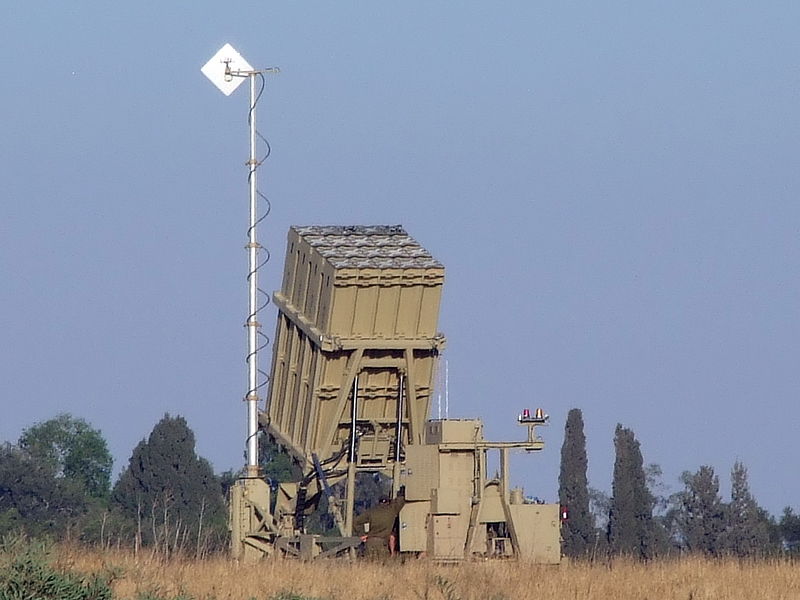
How do you say "Iron Dome" in Korean?

Israeli launchers are barely cooled, they are already interested! Seoul could be the first export customer of Israeli system "Iron Dome". This mobile air defense system has been for the IDF, the real star of the operation "Pillar of defense" against Hamas in Gaza. Because according to Israeli figures, "Iron Dome" has been proven and a rate of successful interceptions that over 90%! From November 14 to 23, five batteries deployed intercepted hundreds of Hamas rockets fired into Israeli territory, saving many lives. Developed by Israeli industrial Rafael, the first export customer of the interception system of medium range would be the United States, a time interested in using in Afghanistan to protect U.S. bases. But disengagement is the agenda, discussions stopped.

Rebounding is today South Korea could become the purchaser. The purchase of "Iron Dome" would by Seoul as part of a broader agreement, in which Korean shipyards Daewoo provide four maritime patrol 1000 tons worth $ 400 million. But the North Korean threat is it similar to Hamas? First "Iron Dome" is not suitable for intercepting ballistic missiles, a real threat to Seoul (Taepodong missiles, Nodong ...). Still not a ballistic missile North has referred the south. And the United States, which have nearly 30,000 soldiers on the spot, should deploy THAAD batteries (Terminal High Altitude Area Defense) and more Patriot systems.


Between the two Koreas, the shootouts that occur most often rockets or artillery. As shown by the last serious clash: the bombing of Yeonpyeong in November 2010. A threat against which "Iron Dome" could actually be useful. Especially since Seoul is just 60 km from the northern border, and many industrial or residential areas are within range of North Korean artillery. But, although effective against shells, "Iron Dome" expensive. Even very expensive. Each rocket interception Tamir costs about 50,000 dollars! And the system can quickly find themselves saturated with bursts of gunfire.

"Iron Dome" works in several phases: first detection of a rocket (Elta radar) and a computer (Impress) provides the point of impact triggering sirens to warn people, finally, a missile Tamir comes to destroy the threat in flight.

Wednesday, 28 November 2012

South Korean Naval Cruise Missiles Deployed

The Republic of Korea Navy reportedly now has advanced upgraded long-range cruise missiles in service, with enough range to reach all parts of North Korea.
Speaking to news agency Yonhap, a South Korean military official confirmed that two of the navy's destroyers have become equipped with Hyanmu-3C (also spelt ‘Hyanmoo') missiles. These are likely Sejong the Great class destroyers, of which there's three in service.
These missiles have a 1,500 kilometre range and are said to be so accurate that, even when covering these kinds of distances, they can strike within about 10 feet of their intended targets.

Naval Cruise Missiles Deployed

According to the representative - whose identity was not revealed - with the naval cruise missiles deployed, South Korea has in part issued a reply to North Korea's recent reinforcements in this maritime area.
In particular, there are concerns over the role to be played by a new military hovercraft launching-base, which North Korea's just finished. Vessels launched from this site might be used in anger against South Korean islands sited close to the North/South border - an area that's already hosted several vicious clashes in recent years.
The Hyanmu/Hyanmoo series remain the only South Korean cruise missiles to have seen active service. Translated into English, Hyanmoo/Hyanmu means, literally, ‘Guardian of the Northern Sky'.

South Korean Cruise Missile

The very latest Hyanmoo-3C is a subsonic South Korean cruise missile, directed by GPS and IGS systems. It can be loaded with up to 500kg of explosives and, in shape, looks a lot like the US-origin Tomahawk cruise missile design.
News of the new South Korean missile's deployment follows, by barely a month, the release of data concerning a new South Korean kamikaze drone known as the ‘Devil Killer.'
This is just another example of how South Korea is revitalising its armed forces, with several programmes currently in motion. They include the AH-X next-gen helicopter programme and the KF-16 Fighting Falcon upgrade project.

Sunday, 25 November 2012

South Korean Naval Cruise Missiles Deployed

The Republic of Korea Navy reportedly now has advanced upgraded long-range cruise missiles in service, with enough range to reach all parts of North Korea.

Speaking to news agency Yonhap, a South Korean military official confirmed that two of the navy's destroyers have become equipped with Hyanmu-3C (also spelt ‘Hyanmoo') missiles. These are likely Sejong the Great class destroyers, of which there's three in service.

These missiles have a 1,500 kilometre range and are said to be so accurate that, even when covering these kinds of distances, they can strike within about 10 feet of their intended targets.

Naval Cruise Missiles Deployed

According to the representative - whose identity was not revealed - with the naval cruise missiles deployed, South Korea has in part issued a reply to North Korea's recent reinforcements in this maritime area.

In particular, there are concerns over the role to be played by a new military hovercraft launching-base, which North Korea's just finished. Vessels launched from this site might be used in anger against South Korean islands sited close to the North/South border - an area that's already hosted several vicious clashes in recent years.

The Hyanmu/Hyanmoo series remain the only South Korean cruise missiles to have seen active service. Translated into English, Hyanmoo/Hyanmu means, literally, ‘Guardian of the Northern Sky'.


South Korean Cruise Missile

The very latest Hyanmoo-3C is a subsonic South Korean cruise missile, directed by GPS and IGS systems. It can be loaded with up to 500kg of explosives and, in shape, looks a lot like the US-origin Tomahawk cruise missile design.

News of the new South Korean missile's deployment follows, by barely a month, the release of data concerning a new South Korean kamikaze drone known as the ‘Devil Killer.'

This is just another example of how South Korea is revitalising its armed forces, with several programmes currently in motion. They include the AH-X next-gen helicopter programme and the KF-16 Fighting Falcon upgrade project.

Thursday, 15 November 2012

T-50B Air Force aerobatic jet crashes in South Korea

An Air Force aerobatic jet crashed in northeastern South Korea on Thursday, killing its lone pilot and sparking a brush fire, police said.

   The T-50B plane went down at 10:28 a.m. on a mountain in Hoengseong, about 90 kilometers east of Seoul, and its pilot, identified only as Capt. Kim, 32, is believed dead, officials said.A parachute was found hanging from a tree about 70 meters from the scene, but the pilot was believed to have failed to eject, officials said.

   It was one of two planes that took off from an air base in nearby Wonju at 10:23 a.m. Witnesses in the area said the two jets flew in parallel before one of them went down in flames.

   The crash also sparked a fire at the scene and firefighters are trying to get the blaze under control.

   The plane belonged to the Air Force aerobatic team, known as "Black Eagles." The T-50B, which derives from the T-50 trainer jet, is designed exclusively for air shows. It is the first time the model has crashed.

   The cause of the crash is not yet known.

Saturday, 10 November 2012

Korea Sells 20 KT-1 Trainer Jets to Peru

Twenty Korean-made turboprop KT-1 trainers have been exported to Peru. It is the third overseas shipment of the KT-1 after Indonesia and Turkey and the first time Korea has sold defense equipment to Latin America.

The governments of the two countries signed the contract worth US$200 million in Lima on Wednesday. The aircraft are 10 KT-1 basic trainers and 10 KA-1s, a light attack aircraft version. Four will be manufactured and supplied by Korea Aerospace Industries and the rest assembled in Peru.

Korea has sought to export the KT-1 to Peru since 2007. It competed with Brazil's Emb-314, Switzerland's PC-9, and the U.S.' T-6A.


"The KT-1 was ahead in terms of price competitiveness and operational efficiency," a government official said. "But we had to overcome a lot of skepticism because Brazil has a monopolistic edge in Latin America."

Some 350 of about 860 trainer jets in Latin American countries are made in Brazil.

Sunday, 4 November 2012

Seoul refuses to join US missile defense in Asia

South Korea won`t develop its own anti-missile defense system. Seoul is not interested in joining Washington’s plans to build up missile defenses in the Asia-Pacific region. The announcement comes after Defense Secretary Leon Panetta`s recent visit to the Korean Peninsula.

Officially, Seoul opposes technical aspects of the global anti-missile defense system in Asia, saying that South Korea is interested in protecting itself from missiles launched at a range of just 500-1000 km (obviously, from Pyongyang), while the US system is designed to work at a much greater range. But the real reason behind the argument is perhaps that Seoul does not want to get on its northern neighbor’s nerves, to say nothing about China as Beijing is a major opponent of the U.S. anti-missile plans in Asia.
Washington’s allies in the West seem to be fed up with the issue of US anti-missile defense plans. It looks as if they would like to distance themselves from this US project which is hardly possible amid intense pressure from the U.S. Now Washington has turned its sights to Asia.
International Chess Grandmaster Vladislav Tkachev offers an interesting chess parallel to this development of the U.S. policy of deterrence. "A new geopolitical idea came into existence at the US embassy in Moscow in 1946. It was about preventing Communist ideas from spreading worldwide. There used to be a bright image in politics at the time: domino chips quickly falling down one after another symbolizing the countries of Eastern Europe and Asia that supported the Marxism - Leninism theory and wanted to oust colonial administrations from their territories."

This very theory was used by the U.S. to justify its intervention of Korea and Vietnam in the late 1950s. These days, however, Washington appears to rely on the same principles, Mr. Tkachev continues. "A similar scheme of deterrence is now used to win control over energy resources and dominating presence in Eurasia. What has changed is the number of countries that the U.S. believes should be deterred: apart from Russia, these are Iran and China. I have a strong feeling that the authors of this theory were inspired by a classical postulate of chess strategy which says that an object of your attack should first of all be encircled, blocked and then eliminated."
As far as the Asia-Pacific region is concerned, it is no secret that the Asian segment of the U.S. global anti-missile shield is aimed not against Pyongyang but China, Washington’s key military and political rival in the region. Nevertheless, the White House should definitely think Seoul`s reaction over.

Thursday, 1 November 2012

Boeing Delivers Final Peace Eye AEW&C Aircraft to Republic of Korea Air Force


Airborne surveillance and battle management capability delivered 5 weeks ahead of schedule in partnership with local industry.
 
ROKAF BASE GIMHAE, South Korea, Oct. 31, 2012 -- Boeing [NYSE: BA] on Oct. 24 delivered the fourth and final 737 Airborne Early Warning and Control (AEW&C) aircraft to the Republic of Korea Air Force (ROKAF), demonstrating the continuing success of the company's partnerships with local industry.
"We delivered five weeks ahead of schedule thanks to the hard work, focus and close collaboration among the ROKAF, Korea's Defense Acquisition Program Administration, Boeing and our in-country suppliers," said Rick Heerdt, Boeing vice president of Airborne Surveillance, Command and Control.
Korea Aerospace Industries (KAI) modified and supported testing of three of the four 737-based Peace Eye aircraft at its facility in Sacheon.
"Throughout the program, KAI demonstrated its outstanding technical capability and modification experience in delivering this powerful airborne surveillance and battle management capability that enhances the security of the Korean peninsula," Heerdt said.
Other Korean companies that made key contributions to the AEW&C program include:

  • Korean Air Aerospace Division: technical services, spares and related parts-handling services
  • LIG Nex1: networking and training
  • Samsung Thales: mission crew training.
  • Boeing Training Services Korea: flight crew training
  • Huneed Technologies: ground-based datalinks communications system.
The AEW&C team has delivered all ground support segments for mission crew training, mission support and system maintenance to ROKAF Base Gimhae, the Peace Eye fleet's main operating base.
Boeing is providing on-site technical support, training and spare parts as part of an interim support program. This allows seamless support of the Peace Eye fleet as it transitions to a through-life support program.
Boeing also has delivered six AEW&C aircraft to Australia. Four other AEW&C aircraft are in production for Turkey.
The 737 AEW&C aircraft is designed to provide airborne battle management capability with an advanced multirole electronically scanned radar and 10 state-of-the-art mission crew consoles that are able to track airborne and maritime targets simultaneously. The mission crew can direct offensive and defensive forces while maintaining continuous surveillance of the operational area.

Monday, 29 October 2012

S. Korea moves to upgrade Patriot defense system

The South Korean military's Patriot Advanced Capability-2 (PAC-2) system has a success rate of less than 40 percent in intercepting ballistic missiles, government sources said Sunday.

   Due to the noticeable inefficiency in deterring North Korean missiles, the PAC-2 system can only be useful in intercepting airplanes, prompting the South's military to rush to introduce the more advanced PAC-3 system, said the sources.

   PAC-2 has been deployed to counter increasing threats from the North's low-flying, short- and medium-range missiles, as part of Seoul's plan to build an independent theater missile defense shield, dubbed the Korean Air and Missile defense (KAMD) network system.

   "The Korea Institute for Defense Analyses and the Missile Defense Agency of the U.S. have just concluded a joint study on the KAMD and found that the PAC-2 system has an interception success rate of below 40 percent," said a ranking government official.

   "A variety of simulations have concluded that in order to raise the interception rate to above 70 percent, the (South Korean) military has to move to the PAC-3 system."


   South Korea has bought 48 PAC-2 systems, including launchers, from Germany at a cost of 1 trillion won (US$909 million) but the PAC-2 launchers can't be used for the PAC-3 system.

   Another government source said, "The core computer system in PAC-2 is superannuated. The system has to be diverted for interception of fighters."

   At the Security Consultative Meeting (SCM) in Washington last week, South Korean Defense Minister Kim Kwan-jin said that his government will push to build the PAC-3 system. In order to strengthen the total missile system, Kim also stressed South Korea would establish a "kill chain" to detect, target and destroy North Korean ballistic missiles, which are capable of hitting South Korea, Japan and Guam.

   Military officials said the PAC-3 and kill chain systems will be pushed in close coordination, forecasting that the PAC-3 system will be introduced starting in 2014.
In a related development, Seoul's defense ministry has strongly denied that South Korea could participate in the U.S. missile defense system, saying that building the KAMD never means participating in U.S. efforts to build a multi-layer defense system.

   U.S. Defense Secretary Leon Panetta said Wednesday after the SCM talks with Kim that Washington is still in consultations with Seoul over its future role in a regional missile defense system, raising speculations Seoul could take part in the U.S. missile defense system.

Wednesday, 24 October 2012

South Korea orders its 100th Sigma 40 navigation system from Sagem

South Korea has ordered its 100th shipborne Sigma 40 inertial navigation system from Sagem (Safran group), confirming its confidence in the system’s laser gyro technology.

The Sigma 40 is a high-performance shipborne inertial navigation system. It is available in several different versions to cover operational needs for all types of warships, from corvettes to nuclear submarines.

These units are widely used by the South Korean navy as original equipment or higher-performance retrofits on both surface vessels and submarines, including PKX patrol boats, FFX frigates and U-209 and KSS-1 submarines.

This latest Sigma order consolidates Sagem’s leadership with the world’s most powerful navies. Part of the ship’s combat system, the Sigma 40’s high-precision measurements contribute to weapon accuracy and performance.

Sagem’s Sigma 40 navigation systems now handle the main navigation function on more than 300 surface vessels (corvettes, frigates, aircraft carriers) and over 50 submarines in 11 different classes, including nuclear (Rubis-Améthyste class), non-nuclear air-independent propulsion (AIP) and conventional propulsion models.
Related Posts Plugin for WordPress, Blogger...